
Quick answer
If a freeze is coming and your pool is still open, keep the water moving all night and open every suction and return valve. Run your pump from evening until the air warms up. On a variable speed pump, low speed is fine. On a Hayward OmniLogic, make sure Freeze Protect is on and the air sensor is out of the sun. Do not count on a heat pump, since most stop heating near 40°F. A gas heater is a backup, not the plan. If your pump stops, call us.

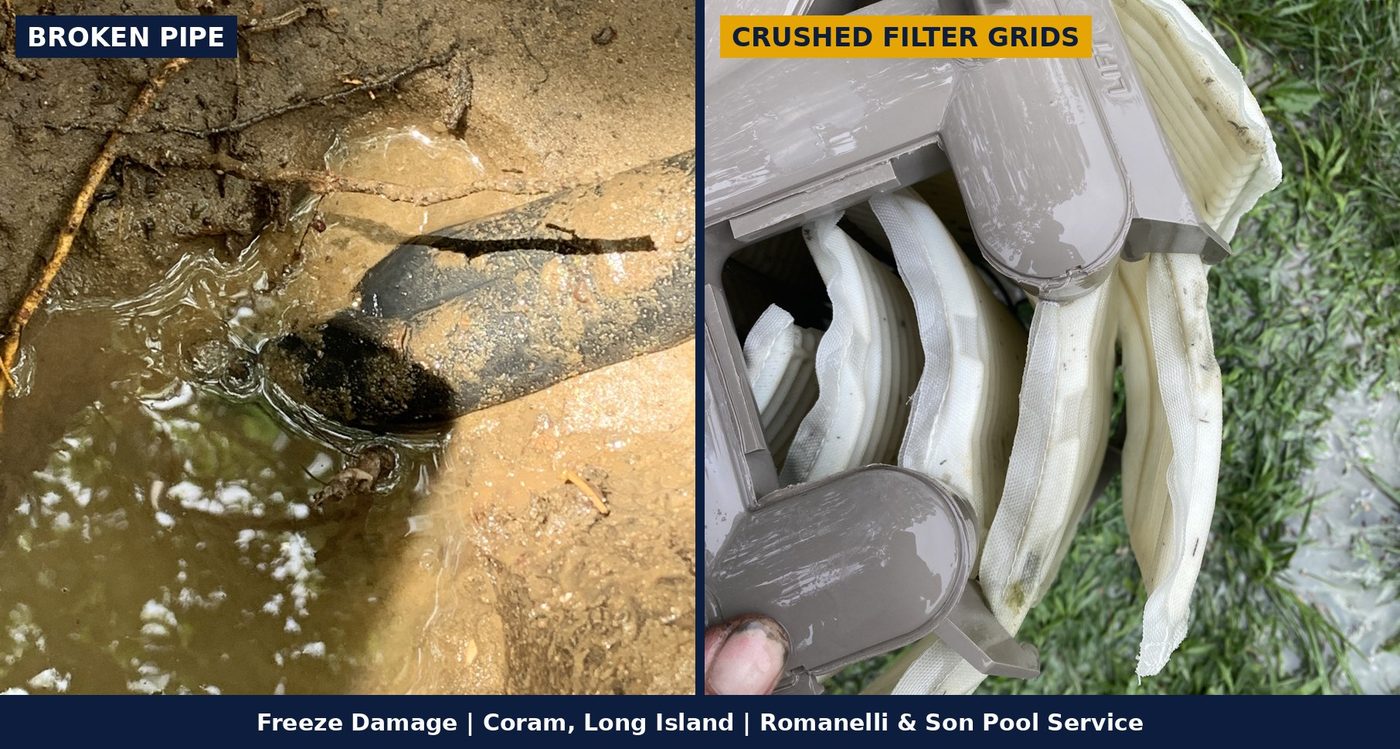
Freeze warnings and watches went out this past weekend for the inland suburbs just around Long Island, including parts of the Hudson Valley, interior Connecticut and northwest New Jersey, where temperatures dropped into the 20s and low 30s. Long Island was not under the warning, but it is a good reminder that freezing nights are close and coming. If your pool is still open, a cold night can crack a pump, a filter or a pipe. It does not take a deep freeze. Here is what to do before the forecast drops here.
Why a freeze hurts an open pool
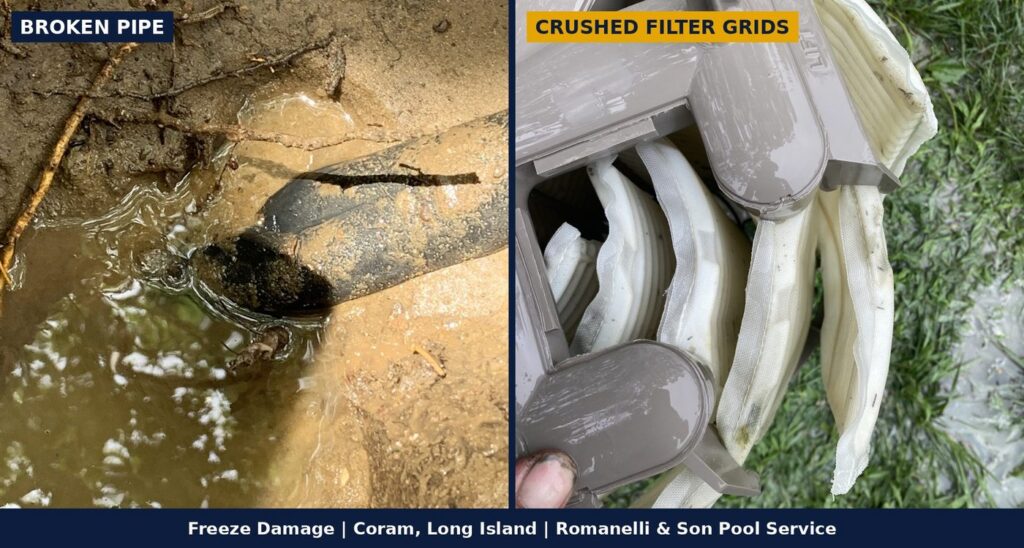
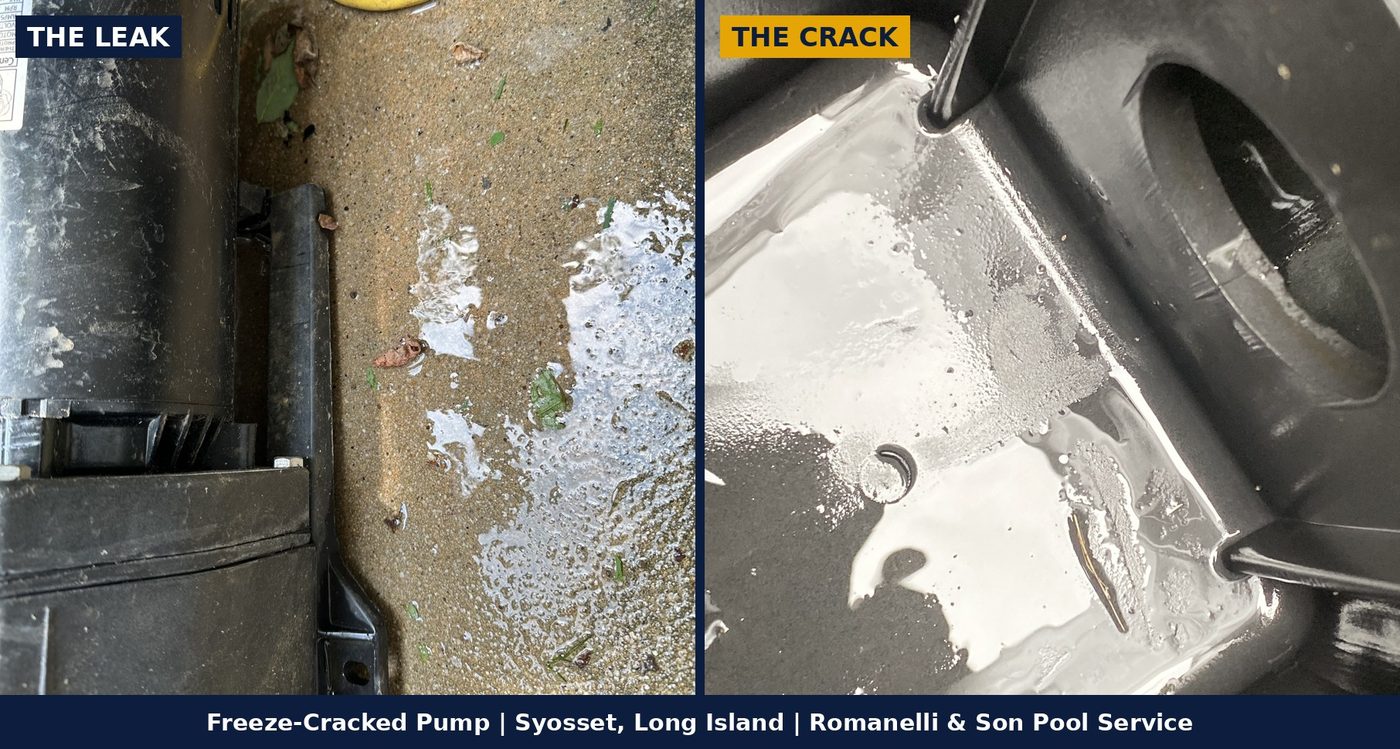
Water that moves is hard to freeze. Water that sits still in a pump, a filter or a pipe is not. When it freezes it expands, and plastic and PVC crack. Equipment that was fine yesterday can be ruined by morning.
The forecast low is measured in one spot. Your backyard can run colder, and frost on the pad is common when the forecast says upper 30s. So do not wait for a 32 on the forecast.
1. Keep the water moving all night
This is the one that matters most. Run your pump from the evening before the cold until the air warms up the next day.
If your pump is on a timer that shuts off overnight, change it. That timer is how most freeze damage starts on an open pool.
Before you go to bed, check three things:
- Pump is running and the return jets are pushing water.
- Every valve on the suction and return lines is open, so water can move through the whole system (see below).
- The water level is at the middle of the skimmer.
Rather skip the cold, wet work? We close Long Island pools from $299.
Book my closing2. Open every valve on the suction and return lines
Walk the equipment pad and open all of them. Water that gets trapped behind a closed valve cannot move. It sits in that one line, freezes, and cracks the pipe or breaks the valve. A broken valve is a repair, and sometimes a dig.
- Suction side (water coming from the pool to the pump): skimmer, main drain, any cleaner line.
- Return side (water going back to the pool): return jets, heater, and any water feature or spa line.
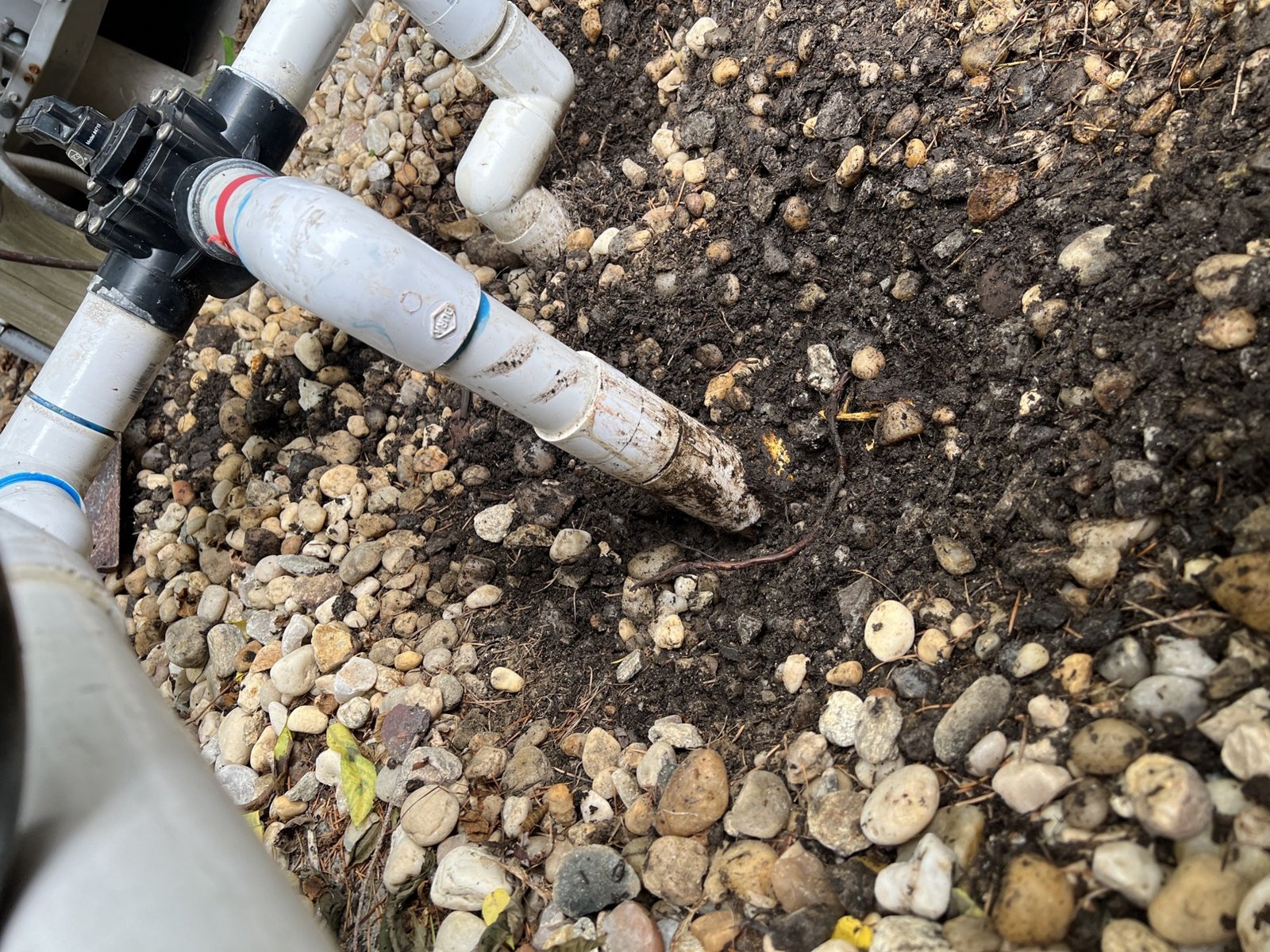
Leave them open until the cold passes. If you are not sure which valve is which, send us a photo of your pad and we will tell you.
3. Variable speed pump? Low speed is fine
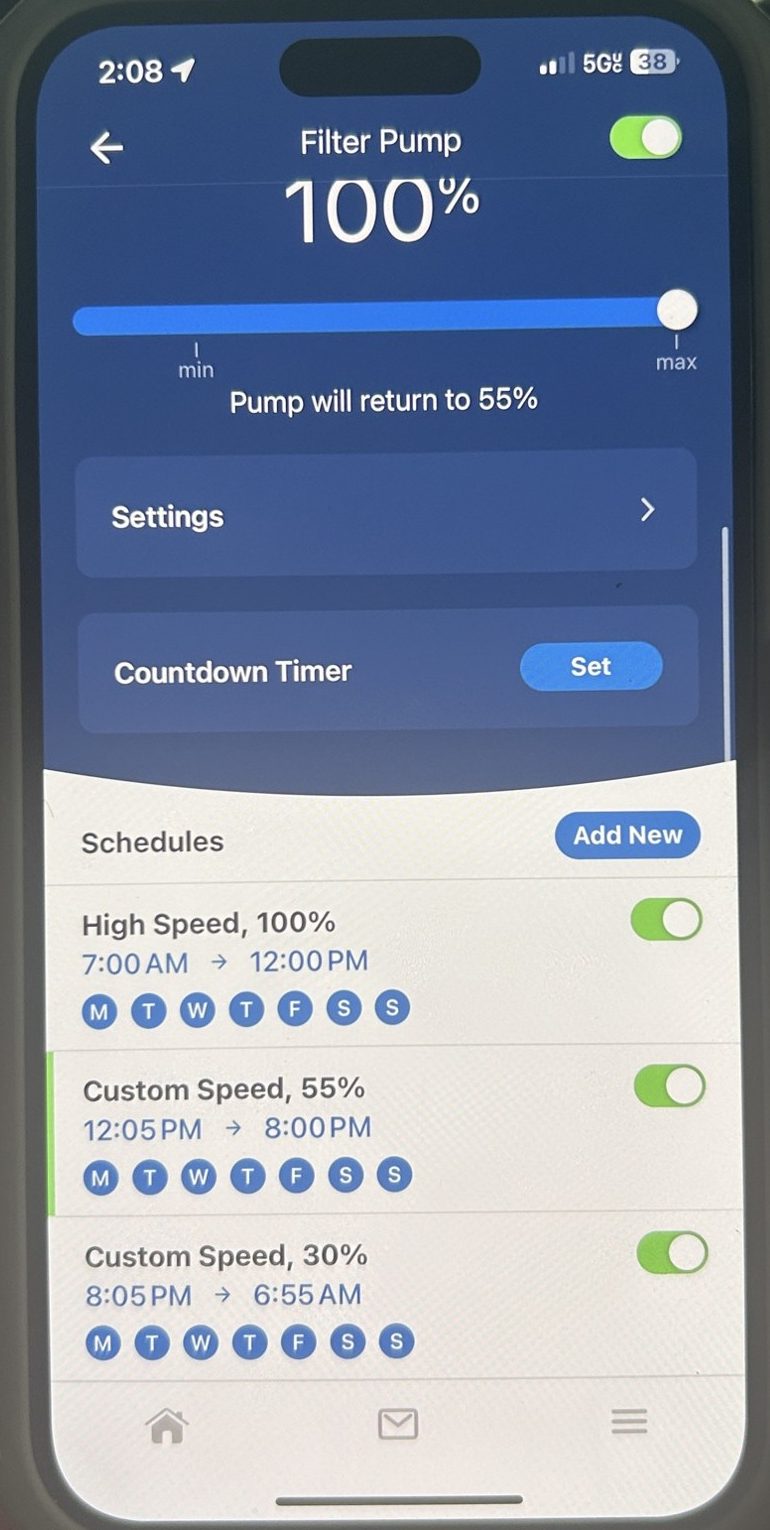
You do not need full speed. On a variable speed pump, a low setting is enough as long as water is really moving through the pump, filter and heater. Do not turn it off.
If you can see the pump on your phone app, set a low overnight speed and leave it on through the cold hours.
4. Hayward OmniLogic? Check Freeze Protect
If you have a Hayward OmniLogic system, it has a built-in Freeze Protect setting. Here is what Hayward’s manuals say it does:
- It turns your pump on by itself. When Freeze Protect is on and the air temperature drops below the trigger, the system starts the filter pump.
- The trigger is adjustable. The default is 38°F, and you can set it anywhere from 33°F to 42°F. A higher number starts the pump earlier.
- You pick the pump speed. On a variable speed pump, you choose the speed it runs while Freeze Protect is active.
- It can pause other things. If Freeze Protect is the only reason the pump is running, the chlorinator will not run. Automatic heating pauses too.
- Pool and spa on one pump? The system swaps the valves between the pool and the spa every 30 minutes, so both keep moving. The pump shuts off for a moment while the valves turn.
- It works off the air sensor. Freeze Protect needs the air temperature sensor to be installed, and it should be mounted out of direct sun. A sensor sitting in the sun reads warm and can keep the pump off on a cold night. If the air temperature on your idle screen looks too high, tell us.
Two things that switch it off.
- The Freeze Prot. button on the Features screen turns Freeze Protect off for a set time (60 minutes or more). The screen warns that doing this could damage your system. Do not touch it on a cold night.
- Shut Down and Service Mode turn off all your pool equipment, and Service Mode also turns off remote control. Hayward’s manual does not say Freeze Protect keeps working in either one, so do not leave your system in them overnight when it is cold. The Features Off button is different. It leaves a scheduled filter pump running.
Where the setting lives. Freeze Protect is part of the Filter Pump setup. The steps on the touch screen are:
- Config, then Config Wizard (it asks for your system’s ID number)
- Edit
- Bodies of Water, then your pool
- Filter Pumps, then your pump
- Freeze Protect: turn it on, set the air temperature, and set the pump speed
Cleaner pumps, water features and other accessories each have their own Freeze Protect setting too, so a waterfall or booster pump can be left out by mistake. This is a setup menu, and it is easy to change the wrong thing. It is a job for a pro, not something to try at the touch screen on a cold night. Not sure Freeze Protect is on? Call or text us and we will check your system and set it for you.
5. Gas heater or heat pump? Know what each can do
A heat pump will not save you. Most heat pumps stop heating once the air gets near 40°F. Even models sold as low ambient list 40°F as the minimum operating temperature. When it is freezing outside, you cannot count on a heat pump. On an OmniLogic, there is also a minimum air temperature setting for the heater. Below that number, the system will not let a heat pump run at all.
A gas heater can help, but only with water flowing. It will not fire without flow, so your pump has to be running anyway. For one cold night, a running pump is usually enough. A gas heater makes more sense as a backup on a hard freeze, or if your pump cannot run all night. It burns gas, so it is not the first move.
Whatever you have, the pump is the plan. The heater is a backup.
What if the pump stops?
If your pump trips, loses power or will not start, and the temperature is heading to freezing, call or text us right away at (631) 472-6275. Do not wait until morning.
Or skip the cold nights altogether
Every freeze warning is a night of watching the weather and hoping the pump keeps running. A closing ends that. We blow out and plug the lines, winterize the heater, balance the water, install the cover and leave you a free bottle of winter water clarifier.
- Above ground: $299
- Inground: $369
- Inground with spa: $569
Closing dates fill up as the weather turns, so sooner is easier. Book online or call (631) 472-6275.
Skip the snow boots. We will check it for you.
Winter Watch visits clear your cover, check the water level and chemistry, test the cover pump and adjust safety cover straps.
Questions? Call or text (631) 472-6275
Common questions
What temperature can freeze my pool equipment?
Water freezes at 32°F. Equipment is at risk when the air stays at or below freezing and the water is not moving. A forecast in the upper 30s can still bring frost to your pad, so run the pump anyway.
Should I run my pump all night when a freeze is coming?
Yes. Moving water is much harder to freeze. Run it from the evening before the cold until the air warms up the next day, and turn off any timer that shuts it off overnight.
Which valves should I open before a freeze?
Open every valve on the suction lines (skimmer, main drain, cleaner) and the return lines (jets, heater, water features, spa). A closed valve traps water in one line, and that water can freeze and crack the pipe or break the valve.
Can I run my variable speed pump on low during a freeze?
Yes. A low speed is fine as long as water is really moving through the pump, filter and heater. Just do not turn it off.
What does Freeze Protect do on a Hayward OmniLogic?
When it is on and the air drops below the trigger temperature, the system starts your filter pump on its own. The default trigger is 38°F and you can set it from 33°F to 42°F. While it runs, the chlorinator and automatic heating pause. It needs the air sensor to work.
Where do I turn on Freeze Protect on an OmniLogic?
Go to Config, Config Wizard, Edit, Bodies of Water, your pool, Filter Pumps, your pump, then Freeze Protect. It is a setup menu, so it is best left to a pro. Call or text us and we will check it for you.
Can I turn Freeze Protect off on my OmniLogic?
The Freeze Prot. button on the Features screen turns it off for a set time. Hayward warns that this could damage your system, so do not use it on a cold night. Do not leave the system in Shut Down or Service Mode overnight when it is cold, either.
Will my heat pump protect my pool from freezing?
No, do not count on it. Most heat pumps stop heating near 40°F air, and even low ambient models list 40°F as the minimum. An OmniLogic can also block a heat pump below a set air temperature. Keep your pump running instead.
Should I turn on my gas heater during a freeze?
It can help as a backup, but it only fires when water is flowing, so your pump has to run anyway. For a single cold night a running pump is usually enough.
What if my pump stops during a freeze?
Call or text us right away at (631) 472-6275. Do not wait until morning.
How much does a pool closing cost?
Closings are $299 for above ground, $369 for inground and $569 for inground with a spa. A closing includes blowing out and plugging the lines, winterizing the heater, balancing the water, installing the cover and a free bottle of winter water clarifier.
First published Oct 18, 2026. Last updated Oct 18, 2026.