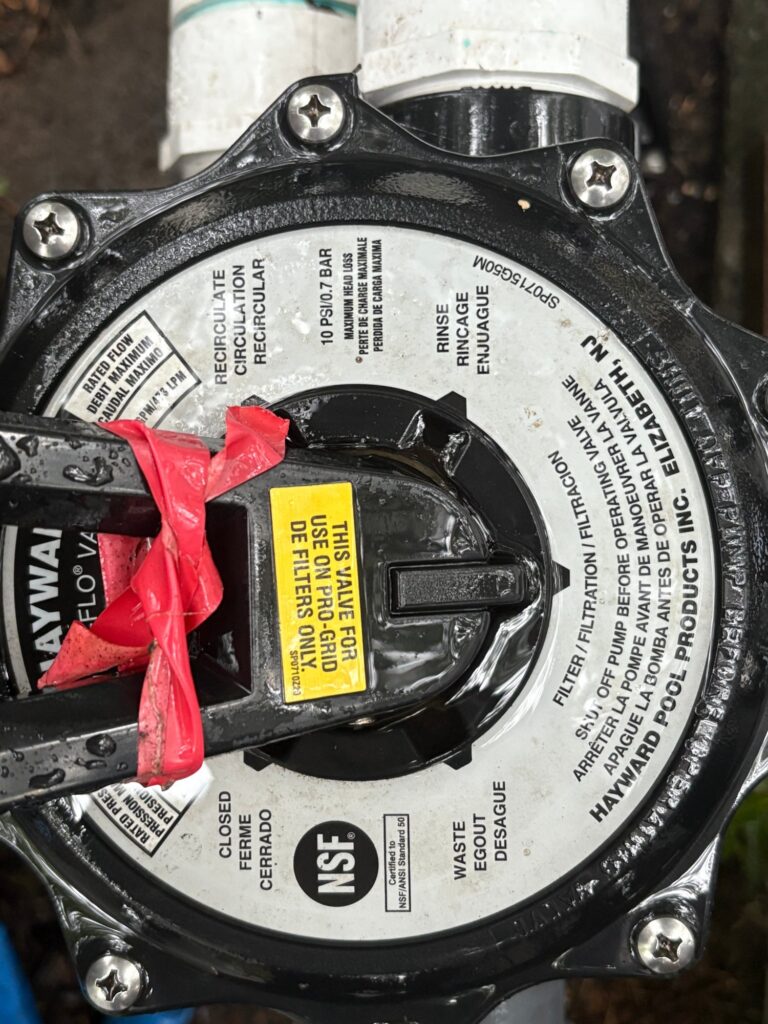
The multiport valve is the big handle on top of or beside your sand or DE filter. It sends the water where you want it: Filter, Backwash, Rinse, Recirculate, Waste and Closed. When it starts to fail, your pool gets cloudy, the pressure acts up or water ends up where it shouldn’t.
Here are seven signs your valve may need a repair or a new one.
How does a multiport valve work?
Inside the valve is a part called a spider gasket, or diverter gasket. When you turn the handle, it lines up the water with the right port. The gasket seals off the ports you aren’t using. When that gasket wears out, water leaks past it. Most of the signs below come back to that.
1. It leaks
Look for drips around the handle, the top of the valve, or where the pipes connect. Also check the backwash line. If water runs out of it while the valve is set to Filter, the spider gasket is likely leaking inside.
Always turn the pump off before you move the handle. If it is still stiff or stuck with the pump off, the gasket may be worn, or there may be dirt or buildup inside the valve. Never force it. You can break the handle or the gasket.
3. Sand or DE in the pool
Sand or DE on the pool floor near the returns means something is letting filter media through. A worn valve gasket is one cause. A broken part inside the filter is another. Either way, have it checked. For DE filters, see why DE leaks back into your pool.
4. Weak or uneven flow
If the baskets are empty, the pump is primed and the filter is clean, but the return jets are still weak or come and go, the valve may be part of the problem. Try the steps in why return jets get weak first.
5. High pressure that backwashing won't fix
Know what your filter pressure reads when it is clean. When it reads 8 to 10 PSI above that, backwash. If the pressure stays high or comes right back, the valve may be blocking the flow. A backwash guide can help you do it right.
6. Strange noises
Grinding, squealing or rattling when the pump runs or when you turn the handle can mean broken parts inside the valve. Turn off the pump and call us.
7. Cracks, fading or rust
Sun and pool chemicals break down plastic over time. Look for cracks in the valve body or lid, a chalky or faded top, or rust on the bolts and clamp. A cracked valve can split under pressure.
Can it be repaired, or does it need to be replaced?
Sometimes a new spider gasket or handle fixes it. If the valve body or lid is cracked, or it is old and worn all over, a new valve is the better fix. Valves also have to match your filter and pipes, so the right one depends on your setup. Book a free consultation and we quote it.
Replacing a valve means cutting and gluing pipe and sealing it to the filter. If it is done wrong, it can leak or crack. It is a job for a pro.
How do I make my valve last longer?
- Always turn the pump off before you turn the handle.
- Keep the water balanced so the plastic and rubber parts last.
- Get the pool closed the right way each fall, so water doesn’t freeze inside the valve.
See one of these signs?
Our tech will check the valve and tell you if it needs a repair or a new one. Our repair crew follows up with a price, and nothing gets done without your OK. Romanelli Pools serves 1,000+ customers across Long Island. See our pool repair page, book at romanellipools.com/book, or call or text us at (631) 472-6275.